

Half of the world’s population are football fans. However, there are countries where this statistic is hard to understand. The most popular sports in certain regions of the world are cricket, basketball, ice hockey, and rugby, or, if you happen to be American, Australian, or Irish, another type of football entirely. If you aren’t a fan, there is nothing wrong with you, just know that, statistically, the next person you meet, will likely be.
As a fan, I have always been curious to understand this phenomenon. What characteristics make this sport so appealing to people with such distinct histories, cultures, and backgrounds?
The lack of affinity certain nations have for football is reflected in the absence of five demographic giants from the 2026 World Cup. China, India, Indonesia, Pakistan, and Nigeria (the latter an African powerhouse that, surprisingly, failed to qualify) did not secure a place on the world’s biggest stage, despite having populations well over 200 million inhabitants.
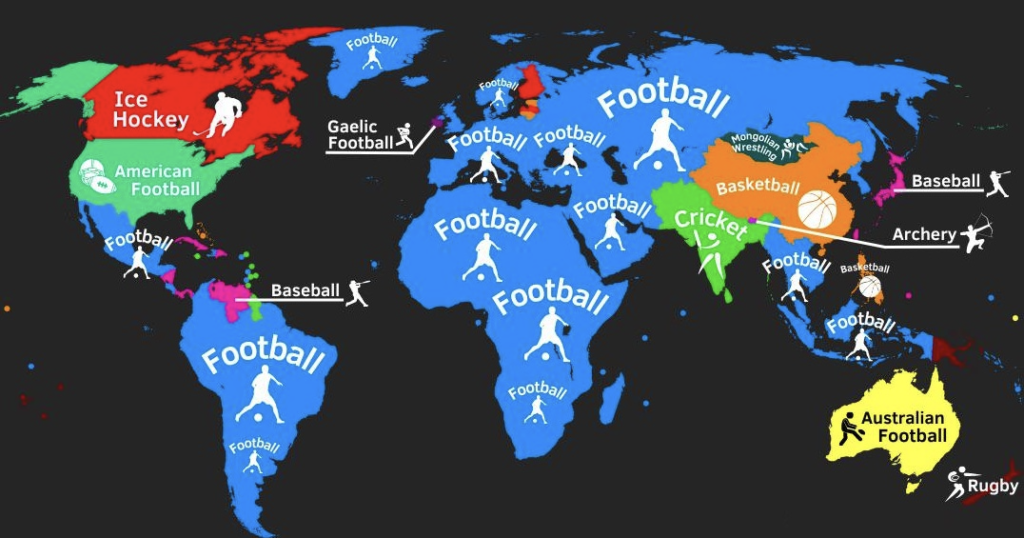
Many argue that the spread of the sport by the British Empire is the primary cause of its popularity. However, cricket and rugby shared the same origin and did not achieve the same global momentum. In fact, many former colonies “rejected” football as their primary sport. India, Afghanistan, Pakistan, Bangladesh, and Guyana adopted cricket, while the United States, Australia, New Zealand, Papua New Guinea, and Ireland preferred rugby or its derivatives (such as American and Australian rules football). Looking at these facts, one could argue that the United Kingdom was the worst promoter football could have wished for, given that its most direct neighbors and colonies opted for other alternatives.
In this article, I describe the five main reasons for football’s hegemony, starting with the most obvious, accessibility.
1st Reason: Accessibility
The most important characteristic for the globalization of this sport is the ease with which it can be played. You don’t need much to bring together a group of people, a football, and two goals. Two goals aren’t even strictly necessary; sometimes a park bench serves the purpose or, if one doesn’t exist, two sweaters on the ground acting as goalposts solves the problem.
In my childhood in public schools, balls were precious resources and often restricted to Physical Education classes. But that was never a reason to stop a child from practicing their favorite sport. We would tear pages out of a notebook, or use scrap paper, crumple them up, and with a bit of tape, we made a football.
Unlike many other sports, football imposes no economic barriers. And if there is no economic barrier, there is no physical barrier… well, yes, physical.
2nd Reason: Inclusivity
During the period between 2011 and 2014, the best forwards in the world were Lionel Messi, Cristiano Ronaldo, and Zlatan Ibrahimovic.
Of these three, only Ibrahimovic played as a traditional number 9. He joined AC Milan in 2010, on loan, and helped them win the Serie A title. After this conquest, he signed for AC Milan permanently in 2011 and was transferred to PSG in 2012. With his new club, he won two Ligue 1 titles and reached the Champions League quarter-finals, with both clubs during that period, losing twice against Barcelona.
Lionel Messi operated more as a “false nine” at Barcelona, linking play with the trio of Spanish international midfielders Xavi, Iniesta, and Busquets. During this period, the Argentine scored 186 goals in official competitions for Barcelona and helped the club win a La Liga title and a Ballon d’Or, the highest award for an individual football player’s performance.
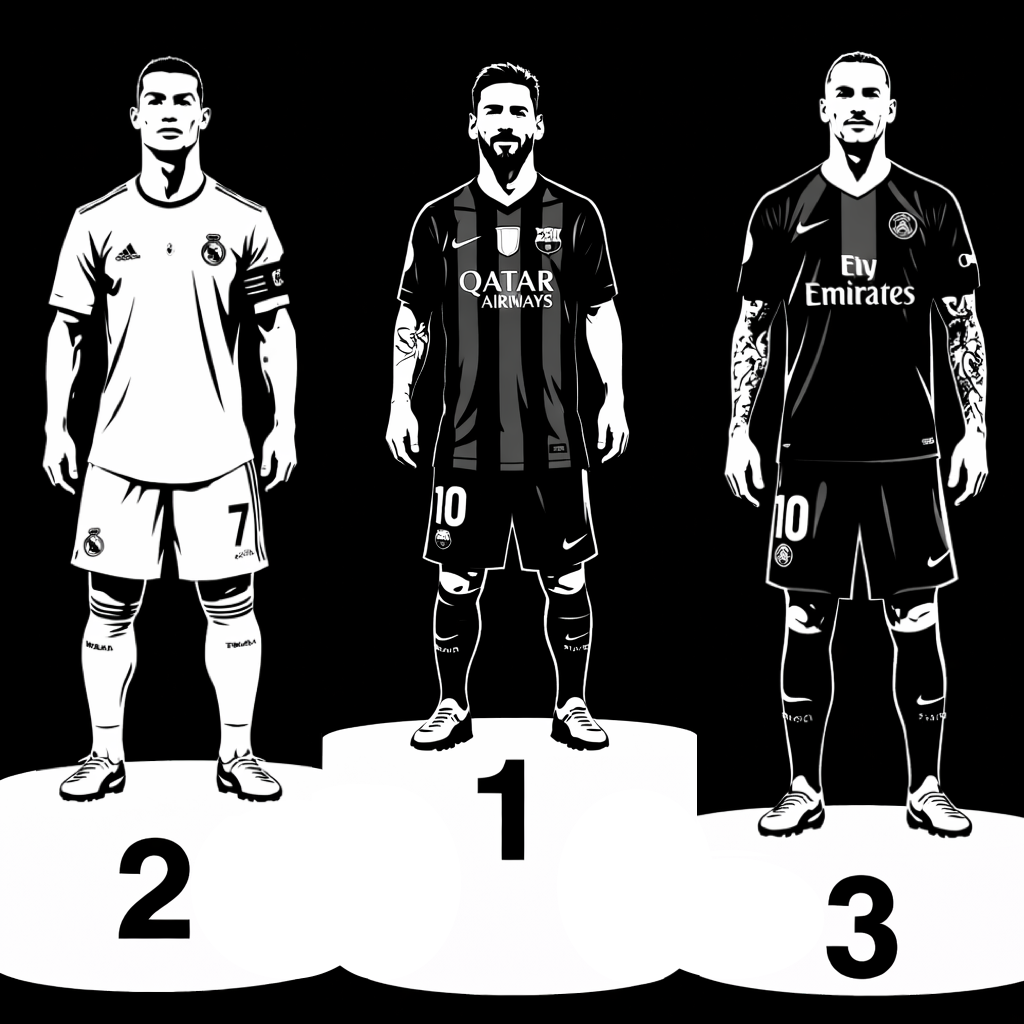
At Real Madrid, Cristiano Ronaldo played predominantly on the left, with Karim Benzema or Gonzalo Higuaín occupying the more central position. However, José Mourinho, Real Madrid’s coach between 2010 and 2013, used Ronaldo as a striker for counter-attacking situations or in important matches where the team did not hold the majority of possession. During this period, he won a La Liga title and a Champions League with Real Madrid, and two Ballons d’Or.
These comparisons serve only to state a fact. No matter how similar the characteristics of these three players are in terms of offensive output or the positions they occupy on the field, one player is 1.7m tall, another is 1.87m, and the other is 1.95m.
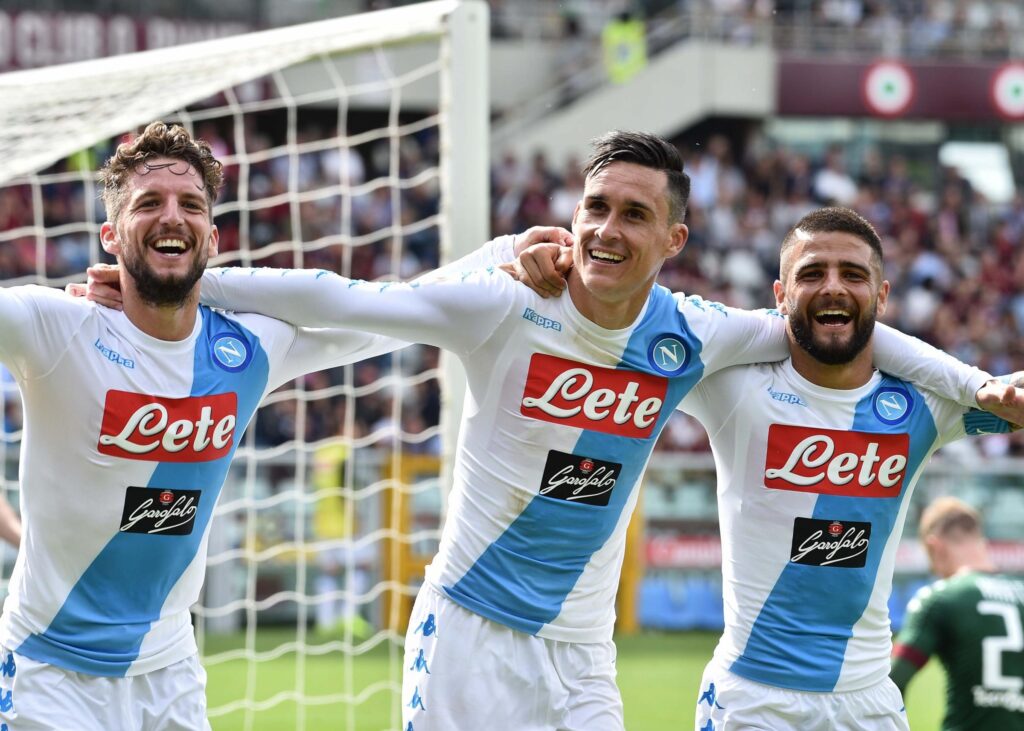
For 7 seasons, between 2013 and 2020, Napoli’s attacking trio consisted mainly of José Callejón, Dries Mertens, and Lorenzo Insigne, 1.78m, 1.7m, and 1.63m, respectively. With an average height of 1.7m, this set produced one of the best attacks Napoli fans had experienced since the days of Maradona. With an incredible display of technical quality, this group of players was responsible for about half of the goals scored by the team during the period the three were at the club, 352 goals in total.

At the peak of Italian football, AC Milan had a special trio of Dutch attackers. Frank Rijkaard, Marco van Basten, and Ruud Gullit, at 1.87m, 1.88m, and 1.91m tall respectively, played together for AC Milan during the 1988/1989 to 1992/1993 seasons. In these five years, competing against some of the best teams World football has ever seen, this group was able to win two European Champions Leagues, two Serie A titles, two Italian Supercups, two Intercontinental Cups, and two European Supercups.
In 1988, they also won the European Championship with their national team and, in that year, the three occupied the podium for the Ballon d’Or. It was won by Marco Van Basten, who would go on to win it two more times; in second place was Ruud Gullit, who had won the previous year; and in third place was Frank Rijkaard. It was the first and last time that three players of the same nationality playing for the same club swept the podium of this prestigious award.
There are countless examples of players with diverse physical characteristics reaching elite standards in this sport. While in many sports—such as basketball, where the point guard position is played by shorter players and the center position is occupied by taller athletes, this is not the case in football. There are elite goalkeepers like Casillas (1.82m) and Courtois (2m), as well as world-class central defenders like Cannavaro (1.75m) and Piqué (1.94m).
Physical diversity is very characteristic of this sport, but it is not the only one. It is also played with the feet.
3rd Reason: Uniqueness
Of all the sports in the world, what makes football such a particular discipline is the fact that the object of play is controlled with the feet. Unlike other sports where one dribbles or controls the ball with the hands, football demands unusual motor dexterity, which requires a higher level of technical ability. This added difficulty contributes to the creation of moments of true magic.
At the time of writing this article, two Portuguese teams, Benfica and Sporting, secured their progress in the Champions League in the final match of the competition’s league phase. Sporting ensured direct qualification with a thrilling 2-3 victory in Bilbao against Athletic, thanks to a goal four minutes from the end. Meanwhile, in memorable fashion, Benfica secured a place in the play-offs with a 4-2 home triumph over Real Madrid. The decisive goal came in the final seconds through a set-piece cross headed in by the most unlikely hero, goalkeeper Anatoliy Trubin. Ironically, the play-off draw has placed Real Madrid in Benfica path once again.
This high level of technical difficulty contributes to another important characteristic of this sport: the unpredictability of the final result of every match.
4th Reason: Balance
It is no longer a surprise when a team fighting against relegation defeats a title contender, regardless of the league or country. There are so many factors related to a football team’s performance that spending rivers of money is not enough to guarantee success. Physical conditioning, diet, sleep quality, technical ability, tactical organization, a player’s psychological profile, medical support, sports science, recruitment, club infrastructure, transparency and communication within the club hierarchy, environment, winning culture, and the relationship with the fans are just some of the most important conditions for a team’s performance.
The competitive balance provided by these factors is just the tip of the iceberg, the most important part is what happens within the four lines.
With an average of only 2.5 goals per game, football is one of the lowest-scoring sports in the world. A small individual error or a tactical failure during an attack-to-defense transition is enough to condemn a team that dominated possession and xG (expected goals) for the full 90 minutes. In football, little attention is paid, at least by sports commentators, to the Herculean level of concentration required to see a game through to the end without making gross errors that compromise the team’s integrity.
At the end of the day, it’s 11 against 11, and in any given game, any team can win.
5th Reason: Meritocracy
The final point I want to address refers to the values that football promotes. Unlike the closed-league model, football is based on a hierarchical system of promotions and relegations that fosters competitiveness. At the end of each season, the best are promoted or crowned champions, while the worst are relegated. English football is the ultimate exponent of this structure; it possesses four professional leagues integrated into a pyramid so complex it almost requires a degree to be fully understood.
As for the market, transfers are limited to specific windows, but there are few real restrictions on salary caps or purchase values. Although “Financial Fair Play” models are now emerging, they often end up crystallizing the power of the wealthiest clubs, promoting the creation of monopolies and multi-club models.
A meritocratic system with pure competition and a mostly unregulated transfer market, this almost sounds like classical capitalism. In a Europe with increasingly pronounced socialist policies, it is interesting to observe a contrary dynamic regarding its sports. On the other hand, that is, on the other side of the Atlantic, the United States of America does things differently.
This is the great irony of modern sport, the USA, the former exponent of the free market, operates its leagues under a model inspired by socialism. Through revenue-sharing systems, the majority of broadcasting income is divided equally, ensuring that the financial success of one is the success of all. Being closed leagues (franchises), the financial risk of relegation is non-existent, protecting the owners’ investment and turning them into glorified monopolies. Furthermore, the draft system inverts meritocratic logic by rewarding the worst-performing teams with the first picks of the best young talent, forcing an artificial parity. With the imposition of rigid salary caps, American leagues prioritize collective balance and the survival of the weakest link, radically contrasting with the “survival of the fittest” that defines European football.
This reflection on American sports helps to understand why, currently, the most valuable teams in the world are overwhelmingly American. The profitability, market value, and investment security provided by this socialist model prove to be economically more effective than the capitalist model promoted by European football.
This year, the number of football clubs in Europe under American control or investment surpassed the historic milestone of 100 clubs. American influence in the world’s major football markets is undeniable. The attempt to implement the Super League, a version of the American sports model, was the first time European fans had to manifest their displeasure, repudiating the idea as soon as it emerged.
Because, while the American strategy conquered the pockets of investors and guaranteed the stability of its clubs, football conquered the hearts of the entire world, or, at least, half of it.