Nowadays, the word anarchy causes some confusion, literally. This word has been hijacked by ‘democratic’ structures, which have assigned it a different identity. Right now, it’s the child that no one else plays with, adults told us not to approach it, without explaining why. Just one more order we submit to, stemming from irrational fears that we do not question.
Anarchy is not Mad Max, punk rock, or kids with covered faces throwing Molotov cocktails. The association of this word with chaos is a cultural myth, recently propagated by established authorities. Whenever an independent group commits an act of terror that doesn’t fit the mold of a religious extremist group, governments and the media are quick to label it as anarchism. It is intellectual dishonesty.
Anarchy (ἀναρχος, transliterated anarkhos) simply means without a leader or without a ruler. It is the ultimate exponent of personal freedom. No free human activity requires a King, a President, or a supreme authority.
“Those who need leaders are not qualified to choose them”
— Michael Malice
Anarchy is only seen as utopian by its critics. Those who discredit or view individual freedom as a utopia expose their own personal values more than the target of their criticism.
In his book Antifragile: Things That Gain from Disorder, Nassim Taleb created the term and developed the concept of antifragility. The author classifies fragility on a spectrum that ranges from: fragility, robustness, and antifragility.
A fragile system or structure is one that requires tranquility, which only develops and grows in times of peace or until it is tested. Robust systems are those that resist chaos, while antifragile ones are those that improve and benefit when subjected to different types of stress.
When we observe the structures present in our current society, we find a strong relationship between anarchic and antifragile systems.
“… a submissão limita-nos, mas a liberdade revela-nos as nossas limitações”
…submission limits us, but freedom reveals our limitations.
— Irene Vallejo
Languages are anarchic in the sense that there is no central authority defining how they must be used. Although grammar rules exist, anyone is free to write and speak as they wish. Many writers ignore these rules to improve their structure or poetic intent, or simply, as in the case of amateurs like myself, involuntarily commit grammatical errors. As long as the reader understands the intention, the language has fulfilled its function.
The antifragility of language occurs in its adaptation throughout history. From Vulgar Latin to Iberian Latin, from Galician-Portuguese to Archaic Portuguese and, finally, to Modern Portuguese, the Portuguese language evolved and adjusted to emerging cultural conditions, territorial conquests, and the migration of peoples. Currently, Portuguese is heavily influenced by Brazilian trends, such as slang and popular jargon. Since the adoption of the internet, all languages are globally impacted by English, and with the migratory movements caused by globalization, it is natural that contact with other languages triggers adaptations and adjustments.
Nature is also an anarchic and antifragile structure. No matter how much humans try to control their habitat and mold nature to their will, there is always a response, an unintended consequence, a restoring of balance. The spread of invasive species in large urban centers is a good example. The population growth of rats, pigeons, seagulls, ants, and cockroaches, among others, is only possible because humans eliminated most of the predators of these species in these areas.
There is no system more complex, nor one that demonstrates more examples of antifragility, than nature.
“The planet has been through a lot worse than us, been through all kinds of things worse than us, been through earthquakes, volcanoes, plate tectonics, continental drift, solar flares, sunspots, magnetic storms, the magnetic reversal of the poles, hundreds of thousands of years of bombardment by comets, and asteroids, and meteors, worldwide floods, tidal waves, worldwide fires, erosion, cosmic rays, recurring ice ages… and we think some plastic bags… and some aluminum cans are going to make a difference? The planet isn’t going anywhere. WE are!”
— George Carlin
We can classify technological development, when it occurs spontaneously and freely, as an anarchic and antifragile procedure. Necessity is the mother of invention.
The Internet is an excellent example. No matter how much parental control exists, there are few cases where parents manage to protect their children from exposure to the Internet. The same can be said of governments. Despite the billions governments spend on spying on their own citizens, only a tiny fraction is processed by filtering systems, and only an infinitesimal portion is effectively inspected by analysts. Aside from the political pressure that several CEOs of major digital platforms, such as Jack Dorsey, Elon Musk, and Mark Zuckerberg, faced to censor content selectively according to government interests, they hold no real control over the Internet.
In recent years, the term “malinformation” was created, it refers to information that is true, or has a factual basis, but is used with malicious intent to cause harm, manipulate, or deceive. Based on this definition, and as long as governments hold the monopoly on violence, they are the only ones with the authority to determine what constitutes “malinformation”.
Beyond censorship on these digital platforms, several people in “democratic” countries have already been convicted for “offensive” online messages.
Enter antifragility.
Platforms that coordinate with governments to promote censorship and the entrapment of their users instill distrust and lose part of their community. They begin to choke on bureaucratic procedures, capital that was dedicated to platform innovation is diverted to creating legal departments focused on content moderation, they lose more users. A hemorrhage of capital begins, generating fear among investors, leading some to reduce their stake in the company. It is the beginning of the end, it is the life cycle of a company that abandoned the antifragility of the Internet and its innovators and allied itself with the fragility of governments and the legal system. The disease is terminal, but it will be a slow process that may take years to complete, in the end, they perish, fertilizing the soil and sowing the seeds for the next generation of architects and internauts, human or otherwise.
“We all grow older, but we don’t all grow up”
— Dr. Neufeld
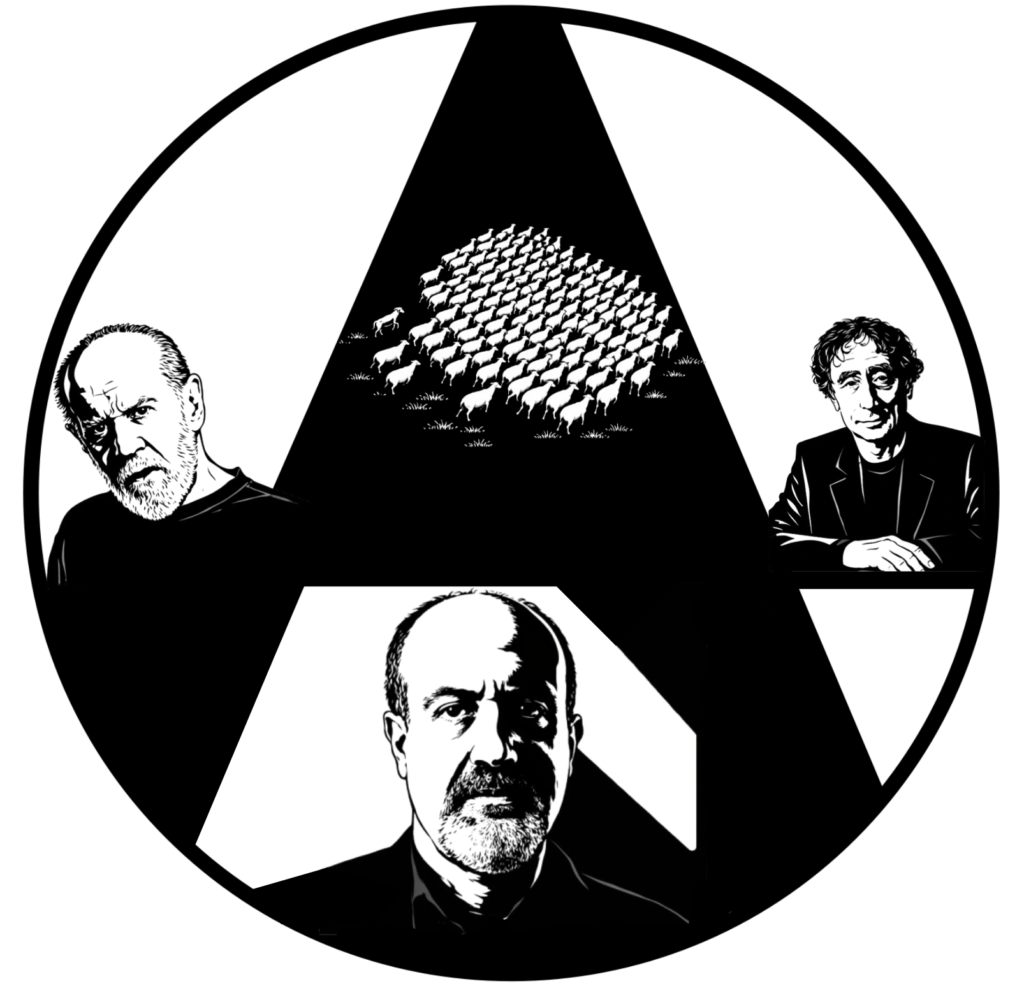
In the books The Myth of Normal and Hold On to Your Kids, Dr. Gabor Maté and Dr. Neufeld mention four irreducible needs for human maturation. These are:
- The attachment relationship: the deep sense of contact and connection with those responsible for them;
- A sense of secure attachment that allows the child to rest from the work of earning their right to be who and how they are;
- Permission to feel their own emotions, especially grief, anger, sadness, and pain. In other words, the safety to remain vulnerable;
- The experience of free play in the maturation process.
The human baby is the most dependent mammal, as it is born neurologically premature. This total dependence on its parents can last up to 2 years of age, and partial dependence reaches up to 13 years, with emotional dependence and the creation of bonds extending until the end of adolescence and early adulthood.
The child’s initial developmental period is marked by attachment figures. Their parents, family, and close caregivers constitute the primary core. Subsequently, development is marked by the secondary core, which concerns interactions with peers. The tertiary core marks interaction with larger-scale groups: society, cultural, religious or political groups, to name a few.
The small explorations a child initiates outside their primary core begin with short bursts of a few minutes. The child moves away from their attachment figure and explores objects, sounds, and animals, among others. As soon as they sense discomfort, a need, or a lack of emotional regulation, they return. These periods of exploration increase, security and autonomy grow and allow the child, through this learning process, to create new neural connections, turning each exploration into a mechanism for healthy brain development.
Nowadays, we are warned of the dangers involved in leaving a child unsupervised in the street or other public places, however, that is not what these explorations are about. Although these dangers are exaggerated and carry no statistical weight, the presence of an attachment figure is necessary for the success of this learning mechanism. Another obstacle presented today against this process is the capture or distraction of the child’s attention by new technologies.
The healthy development of a child allows the individual to develop internal security and emotional and cognitive autonomy. When this maturity does not occur, the individual is more vulnerable to group psychology and the adoption of external structures and values. This search for validation and acceptance from others reveals an internal fragility, an insecurity stemming from an incomplete formation process in their childhood development. Just as the child explores the outside world to return to the affective core and, with the help of parents, consolidate their experiences, the adult individual, equipped with the neural capacities developed in youth, must be able to reflect on their experiences, information, and interactions with external groups in order to build and define their individuality.
Many associate individualism with egotism, they are not the same. Someone who values autonomy and individual development, of whatever kind, is able to take on, or not, more commitments and responsibilities, as well as having greater availability for others.
The lack of individuality and autonomy explains contemporary phenomena such as political polarization, dependence on external systems and structures, social anxiety, or “mass” conformity.
The greatest hoax the State ever perpetrated was the concept of the “masses”. The “masses” are part of a projection of the State onto the population it governs, it’s a statistical hodgepodge, a collective mediocrity. It is not a reflection of reality.
It is relevant to understand group psychology to understand how these interactions develop. Our first reaction is instinctive, as soon as we observe or hear certain keywords, an emotional reaction is triggered. In the moment, we defend our position, formed based on the information and knowledge we possess on the subject. Later, outside the context of collective interaction, we lower our guard, reflect on what was discussed, and end up altering or consolidating our positions.
Over the years, we have become cynical. Childhood explorations and play, which are based on the process of observation and once allowed for the development of healthy neural networks, have been transformed into interactions that trigger emotional reactions heavily grounded in life experience or in stereotypes and propaganda designed to categorize us. It is easier to control the people if they are divided into groups. Our individuality and autonomy limit established power. We are, individually, its antifragility.
“People are wonderful. I love individuals. I hate groups of people. I hate a group of people with a ‘common purpose’. ‘Cause pretty soon they have little hats. And armbands. And fight songs. And a list of people they’re going to visit at 3am. So, I dislike and despise groups of people but I love individuals. Every person you look at, you can see the universe in their eyes, if you’re really looking.”
— George Carlin
The abandonment of anarchic values and the permission of the consolidation of power is an incomprehensible error when one studies the historical cycles of empires.
An empire is born from the sweat and labor of the people, enjoying a period of prosperity and expansion. Political leaders become blinded by the power relinquished by the people, institutions are formed, and monopolies emerge, most notably the monopoly on violence. Corruption lubricates the gears of the political system, while taxation allows for unfair competition in subsidized industries. When negligence and incompetence become systemic, due to a lack of market mechanisms or accountability, the people’s trust is betrayed. The empire then enters the phase of monetary devaluation and excessive military expansion until it reaches the point of no return, where the system’s complexity becomes greater than the resources available to maintain it.
“This ideia of permanence via brute force is not historically supported and if you doubt it you can go to any museum of antiquity and see what all of the thugging gets the thugs. It come to an end. A messy end and it’s never to their benefit… The reckoning is not only coming, it is here. From ends that the opressor does not yet perceive and they are the last ones to know, and by the time that they realize is already to late.”
— Yasiin Bey
There is no authority over anarchic values, living up to its name. From Henry David Thoreau to Emma Goldman, from Mikhail Bakunin to James C. Scott, writers, philosophers, activists, linguists, scientists, anyone who understands the systems we are embedded in, who knows how to identify the laws that restrict us and who lives or explores the limits of their personal freedom, contributes to improving the values and the definition of anarchism.
Nature made us complex, agriculture made us slaves, society made us dependent, and globalization made us empathetic.
This empathy should be valued if contextualized at a local level, but it is impossible to demonstrate or frame it on a global scale. This hijacking of empathy, often triggered by the Internet and the media, incapacitates us and makes us more prone to giving up our freedom in the hope that authorities will use that freedom to benefit others.
However, giving up our freedom benefits no one and serves no one, it simply feeds the existing system. We accept the rigidity of the political system because we believe that, for it to be efficient and function correctly, it must not break to the will of the individual, however, it is exactly the opposite. A system or a law that does not work or does not justify its benefits in favor of the individual should not exist.
The current empire is as fragile as all those that preceded it.
Its fragility is structural.
Its failure is internal.
Its decline is evident.
And the individual is always the first to realize it.