
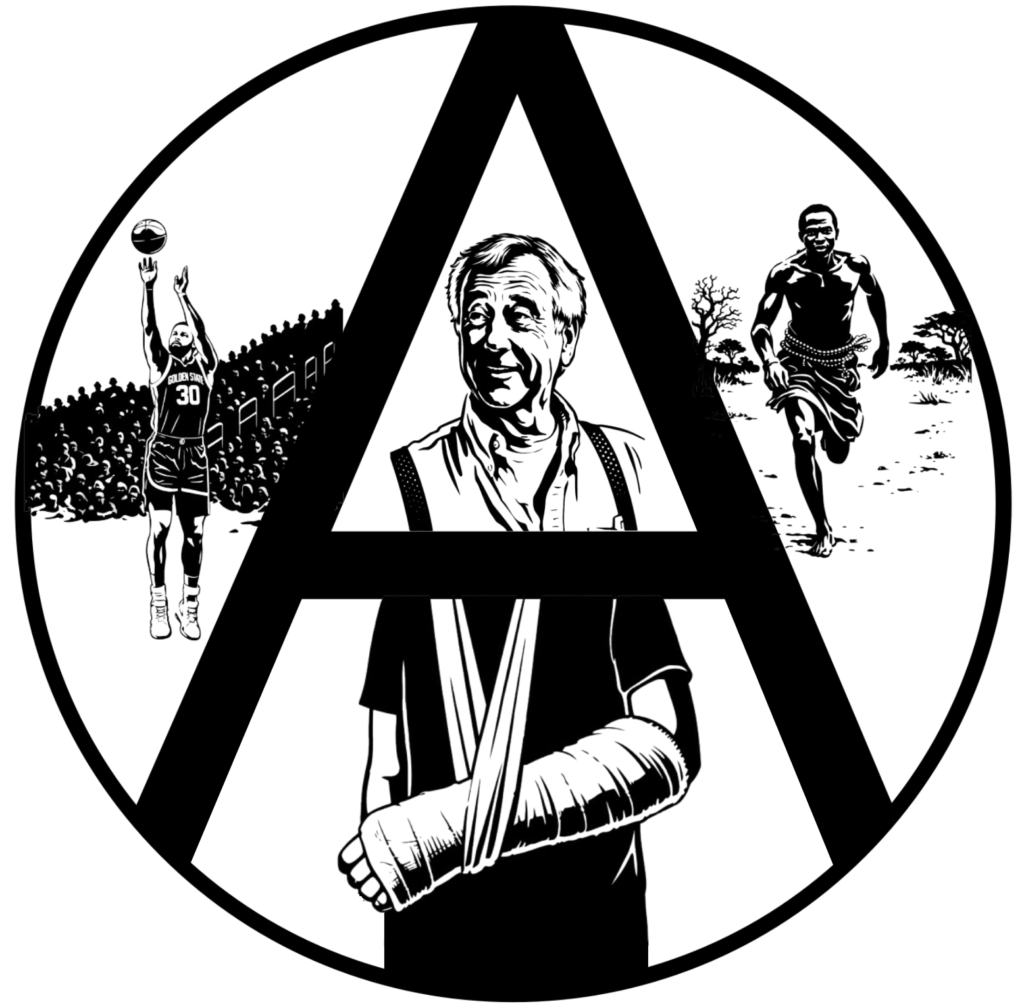
“If you can’t fly, then run. If you can’t run, then walk. If you can’t walk, then crawl, but whatever you do, you have to keep moving.”
— Martin Luther King Jr.
I’ve always hated running. Wasting all this energy only to get joint pain and sweat-soaked clothes in return. What’s the point? What’s the goal?
Running a certain distance in a specific amount of time? And if it takes longer than expected, have I failed? If I run a longer distance, do I call it progress? How do I track these things? Do I need to get a GPS watch?
I don’t like wearing watches. When I was a kid, I was always losing them. And after all, I thought the motivation for running was to enjoy and observe our surroundings. Now I have to spend the whole time staring at my wrist and worry about my pace?
As a child, I played various sports, perhaps too many, to the point where I felt I never specialized in any. Team sports always motivated me more. There is camaraderie, a purpose, a goal, it doesn’t matter what your role is on the team, you are part of it, and the focus is on winning collectively. Your performance isn’t just important to you, but to everyone, a poor performance is disappointing for both yourself and the group. If the team wins, you win, if the team loses, you lose, regardless of your individual display.
In adult life, practicing team sports is harder. Schedules, routines, work, commitments, family, or friends take priority. Sports or training happen not when you want, but when you can. Growing older forces us to listen to our bodies. The vitality and explosion of energy we had when running from the classroom to the playground is replaced by mobility exercises, stretching, and warm-ups before any physical activity.
It was by paying closer attention to my body that I discovered minimalist or barefoot shoes. The concept is simple: a thin sole with zero heel-to-toe drop for better proprioception, and a wider toe box to allow the toes to splay naturally. The benefits? Strengthening the feet and heels, allowing greater freedom of movement for the heel, foot, and toes.
Overall, it makes sense. In the same way that when buying gloves, we want something that doesn’t limit movement or finger dexterity, a wider toe box, or even foot-shaped shoes, allows for the natural movement of the foot and toes. If there were no advantage to this, everyone would wear oven mitts outside.
The feet, along with the hands and face, are important thermal receptors for regulating internal body temperature. The minimalist shoe concept not only improves this thermal regulation but also blood circulation and reduces surface moisture on the foot.
There are downsides, such as greater exposure to extreme temperatures and the need for an adaptation period. But these are short-term sacrifices for long-term benefits.
In retrospect, one reason I never developed a great affinity for running is that, in my mind, it didn’t make sense to practice a sport that takes place essentially in the sagittal plane, with high repetitions and impact on the joints, in a pair of shoes not ergonomically designed for the structure of the foot, on compact surfaces like asphalt or concrete.
When I started using this type of footwear, I noticed immediate differences. Instead of my knee or hip joints aching, I felt soreness in my foot muscles, calves, and leg tendons.
In the long run, I began to notice a difference in the shape of my foot. Instead of having swollen feet after a walk or hike due to poor circulation and restricted movement in traditional sneakers, I noticed more developed musculature.
“Running is jumping from one foot to another and you never jump on your heels”
— Graham Tuttle (The Barefoot Sprinter)

Shoes designed for running have a heel lift, we are forced to land on the heel first, braking the momentum of the run, and only then, with the foot planted, can we generate force to propel ourselves into the next stride.
The image above shows that the forces produced in a heel strike reach a peak more quickly (top diagram) than in a forefoot landing (bottom diagram), while also maintaining a longer peak of tension.
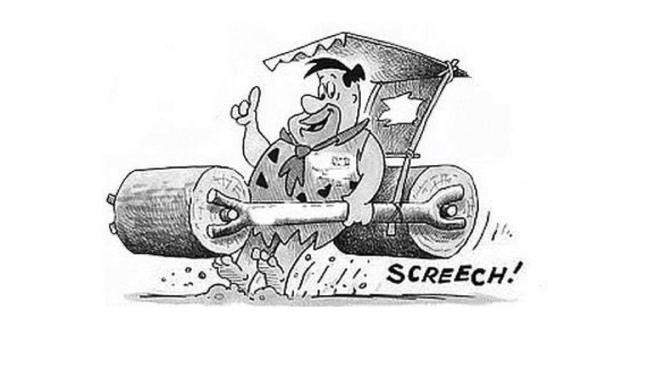
The heel serves to brake the natural running motion. The best representation of this is the cartoon of Fred Flintstone braking his car with his heels.
One of the best basketball players in the world and certainly one of the best shooters in NBA history, Stephen Curry, uses a similar technique for his shot. Although it is a hand technique, we can draw a parallel between the tendons, fingers, and the movement used to shoot the ball with the movement of the feet during a run.
“Line the seams up. Make sure the ball is not sitting in your palm… You are going to try to keep your elbow tuck, not chicken winged out. And then, I say you want to shoot with as much arc and spin as possible…it’s more of a fingertip shoot… I want it to roll off the fingertips”
— Stephen Curry
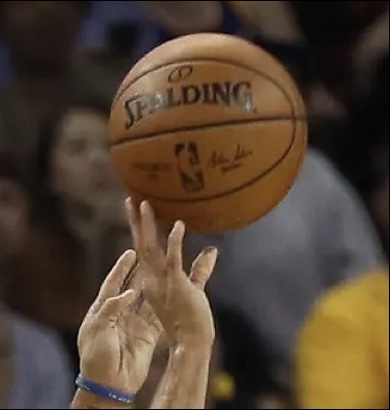
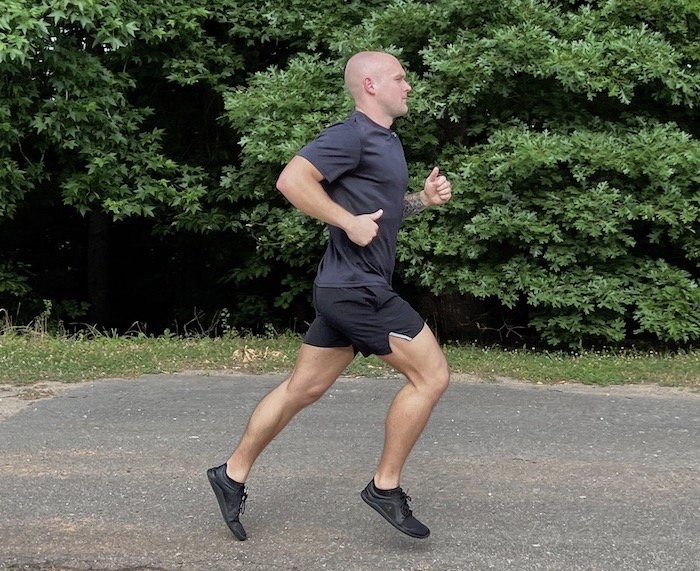
The movement of running or shooting a ball doesn’t end at the heel or the wrist, it ends at the tips of the fingers.
To reduce the risk of injury, it is fundamental to study the concepts of Sports Biomechanics, particularly the principles of Plyometrics and Running Economy. One of the central pillars is understanding the stretch-shortening cycle of muscles and the elastic component of movement. In efficient running, kinetic energy is temporarily stored as elastic potential energy in the tendons, especially the Achilles tendon, as well as in muscles and the plantar fascia, and is then released during the propulsion phase.
Running is more akin to loading a spring than pushing against the ground, the greater the elastic stiffness of the system, the more energy is reused. This mechanism not only attenuates impact forces but also reduces muscle fatigue by optimizing metabolic cost.
The spine and core musculature also play a crucial role in locomotion. Popularized by Serge Gracovetsky, the Spinal Engine Theory explains that the spine is not merely a support structure, but the primary engine that initiates human movement. Just as observed in aquatic animals, the spine generates and transmits energy through coordinated patterns of rotation, lateral flexion, and torsion. As seen in aquatic animals, the spine generates and transmits energy through coordinated patterns of rotation, lateral flexion, and torsion. This dynamic is clearly illustrated in recordings showing individuals without lower limbs moving solely through trunk motion. In these cases, the spine converts rotational force into linear progression, demonstrating that effective locomotion depends on the biomechanical integrity of the axial skeleton.
These theories contradict my initial perception that running develops only in the sagittal plane. In reality, it occurs in an integrated way across all three axial planes: sagittal, frontal, and transverse.
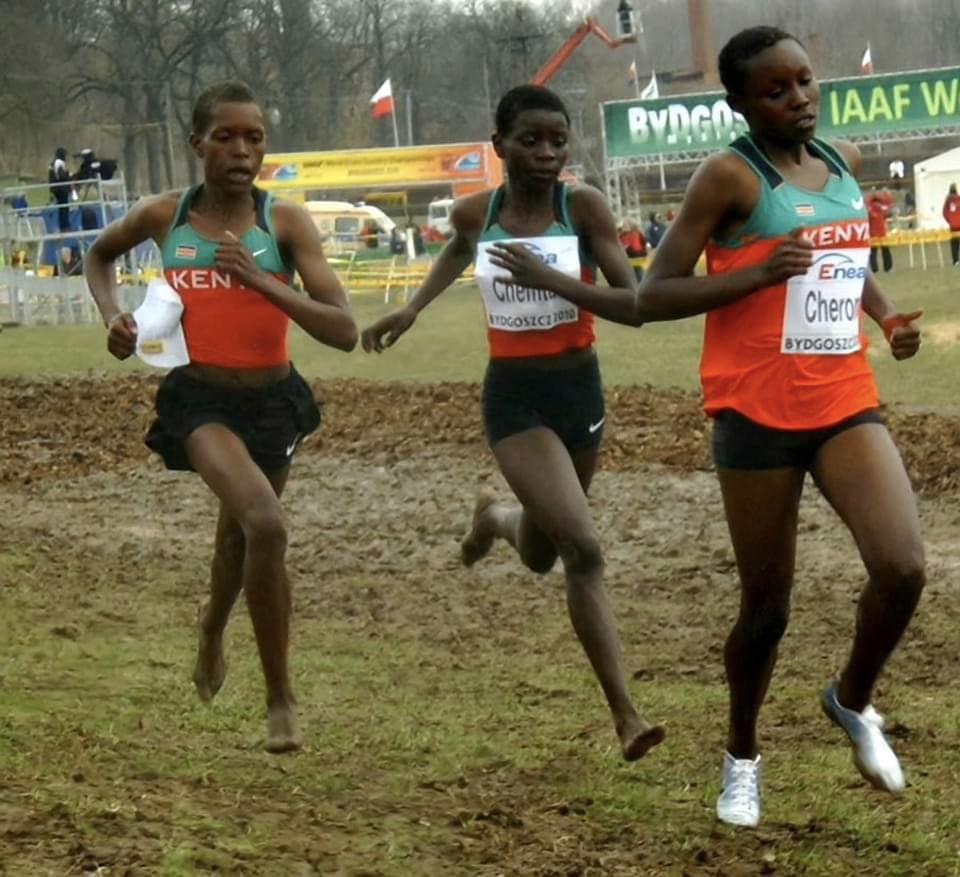
The best runners in the world run barefoot.
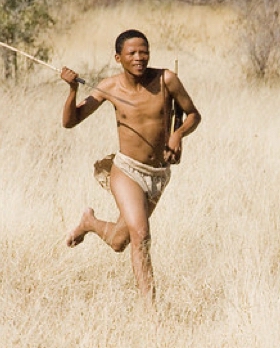
The San people of the Kalahari Desert are the oldest inhabitants of Southern Africa, where they have lived for at least twenty thousand years. Survivors of their struggle against colonialism, these people do not domesticate animals or practice agriculture, they are traditionally hunter-gatherers.
San men have a formidable reputation as trackers and hunters. Although they use traps, their traditional hunting method is bow and arrow. Using a technique recognized as one of the oldest in existence, persistence hunting, they chase their prey to the point of exhaustion. Even though they apply a deadly poison to the arrow, it can take hours for a small antelope to die, or even days in the case of large animals. Their techniques are so precise that they can distinguish the tracks of the wounded animal from the rest of the herd. The poison is neurotoxic but does not contaminate the entire animal. The area where the arrow strikes is cut out and discarded, but the rest of the meat can be consumed. Since the poison’s effect is not immediate, the hunters must track and follow the animal until they find it.
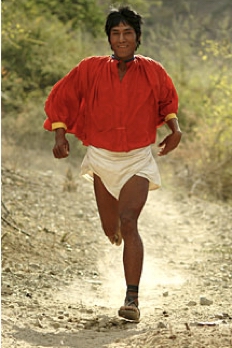
Other examples of barefoot or minimalist-shod runners are the Kalenjin tribe of Kenya and the Rarámuri tribe of Mexico.
Three years ago, I broke my wrist and promised myself those would be the first and last bones I would break. I spent six months recovering from that injury. After months of immobilizing the wrist, as soon as the cast was removed, I already had a mobility routine planned. My goal was to reach the final evaluation appointment and have the doctor tell me I didn’t need physical therapy sessions. The progress toward achieving full mobility was slow. It required patience and psychological management to understand the limits of my capabilities. Despite this, even with the cast on, my stubbornness allowed me to continue cooking, driving, and carrying grocery bags.
These self-taught physical therapy sessions triggered other physical activities. I started a bodybuilding routine based on the principles of periodized training, focused on muscle hypertrophy through a progressive increase in workload or weight, without ever compromising the full range of motion.
Despite the muscle mass I was able to develop, I quickly realized the limitations. Many of the exercises train isolated body parts, dividing the body into muscle groups and are performed in uniaxial planes, something that does not reflect the movements applied in real life.
“Strength is gained in the range it is trained”
— Charles Poliquin
The body has a fantastic adaptation mechanism. Each person adapts it to their own needs. I do not profess any absolutism, and I reserve the right to completely change my perspective on the ideal training for my physical health. However, I have already felt many benefits that barefoot running has provided me. I like to implement activities in my routine that I see myself doing ten years from now. Sustainable activities. If you don’t see any seniors practicing your sport, I have bad news.
This article was written at a very early stage in my journey of using minimalist shoes for running. I believe that, subconsciously, I decided to write about this topic as a way of committing myself to this activity.
Toes and fingers… I gave you freedom. Now don’t let me down.